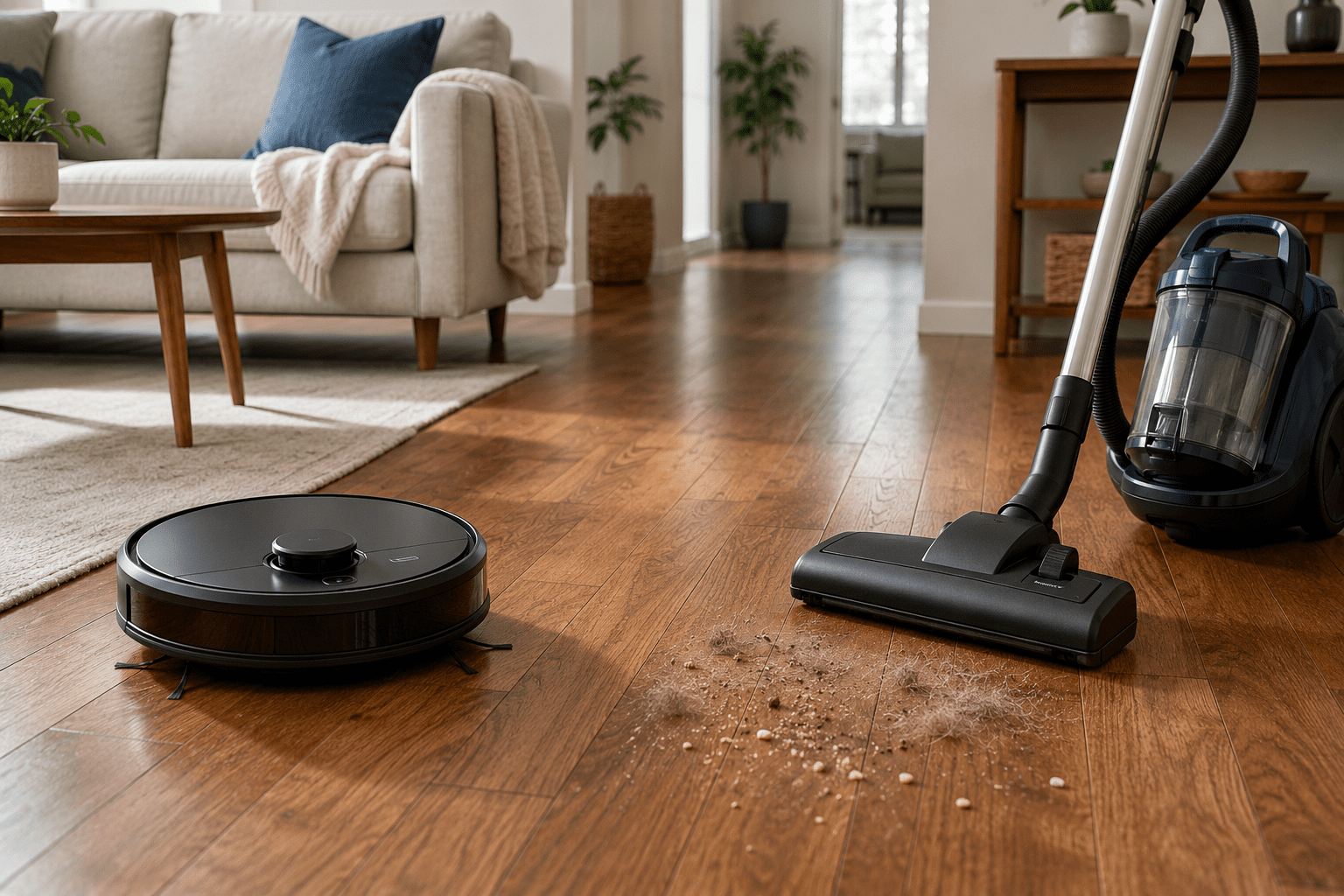
Hardwood floors look beautiful — right up until they don’t. Dust bunnies in corners, pet hair along the baseboards, grit from shoes. Keeping them clean is an ongoing job, and the tool you use matters more than most people realize.
The robot vacuum vs. traditional vacuum debate has been going on for years, and honestly, there’s no single winner. It really depends on your home, your habits, and what “clean enough” means to you. This article walks through the key differences so you can make a practical call rather than just going with whatever’s on sale.
How Each Type Handles Hardwood
Hardwood is one of the easier surfaces to vacuum — no deep pile to work against — but it does have its quirks. Gaps between boards trap fine dust. Grit can scratch if dragged rather than lifted. And anything too forceful can scuff a delicate finish.
Traditional vacuums have been built around suction power, and that’s still where they shine. A good upright or canister model can pull debris out of board gaps, handle larger debris like crumbs or litter, and reach edges with a dedicated attachment. You’re in control of every pass.
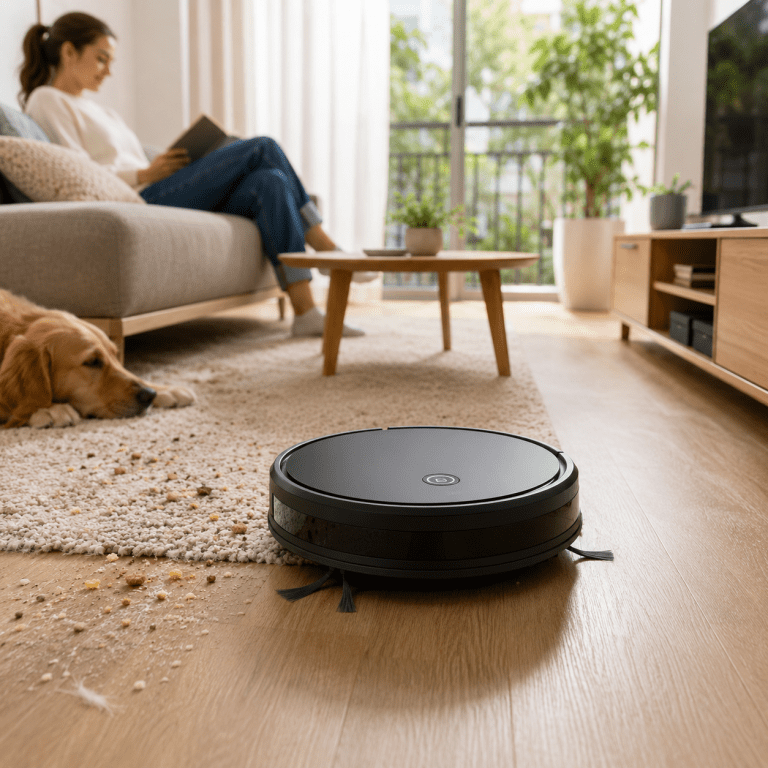
Robot vacuums take a different approach. They’re designed to run often — some people set them daily — so the idea is to catch dust before it builds up. The cleaning isn’t as thorough in a single session, but consistent daily runs can keep floors looking surprisingly good. The trade-off is that corners and edges are where they struggle most, and they’ll miss the occasional stubborn patch under a chair.
For hardwood specifically, both types work. But they work differently.
Cleaning Performance: What the Data Actually Shows
This is where things get interesting. A traditional vacuum, used properly, will outperform a robot on any given day. More suction, better edge tools, and a human operator who notices what the machine misses.
But “used properly” is doing a lot of heavy lifting in that sentence.
Most people vacuum once or twice a week at best. A robot vacuum running daily covers more total ground over the same period — even if each individual run is less thorough. Studies on cleaning frequency suggest that shorter, more frequent sessions can reduce allergens and fine particle buildup more effectively than weekly deep cleans.
That said, if you have a dog that sheds heavily, or kids who track in mud, a robot vacuum running alone probably won’t cut it. You’ll still want a traditional vacuum for those heavier loads.
The practical answer: robot vacuums maintain cleanliness, traditional vacuums restore it.
Cost and Convenience Over Time
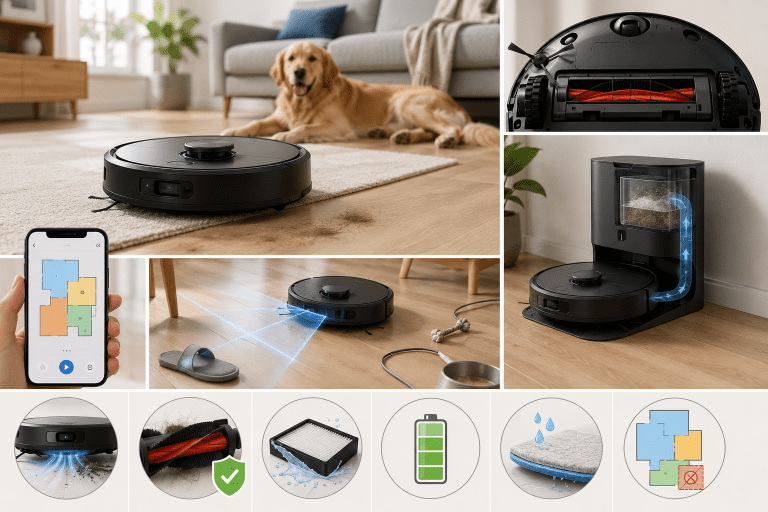
Upfront cost for a decent robot vacuum starts around $250–$300 for a basic model that handles hardwood well. Higher-end options with mapping, self-emptying bases, and obstacle avoidance run $500–$1,000 or more. Traditional vacuums have a wider range — anything from $80 to $600+ depending on brand and features.
Over time, the math shifts. A robot vacuum that runs autonomously saves real time — somewhere between 30 minutes to an hour per week for a typical home. That adds up. Maintenance costs are similar for both: filters, brushes, and bags or bins need periodic replacement.
One thing worth noting: hardwood floors are easier on robot vacuums than carpet. Less motor strain, longer brush life, fewer jams. If your home is mostly hardwood, a robot vacuum will generally last longer than it would in a carpeted space.
Where Robot Vacuums Fall Short
It’s easy to get caught up in the novelty of a robot vacuum and forget its limitations. A few things to keep in mind:
Robot vacuums don’t do stairs. Full stop. If you have a multi-level home, you’ll need a traditional vacuum regardless.
They also struggle with clutter. Toys, cords, chair legs, and pet bowls can all stop a robot mid-run or cause it to miss large sections of floor. A well-organized room gets cleaned much better than a messy one.
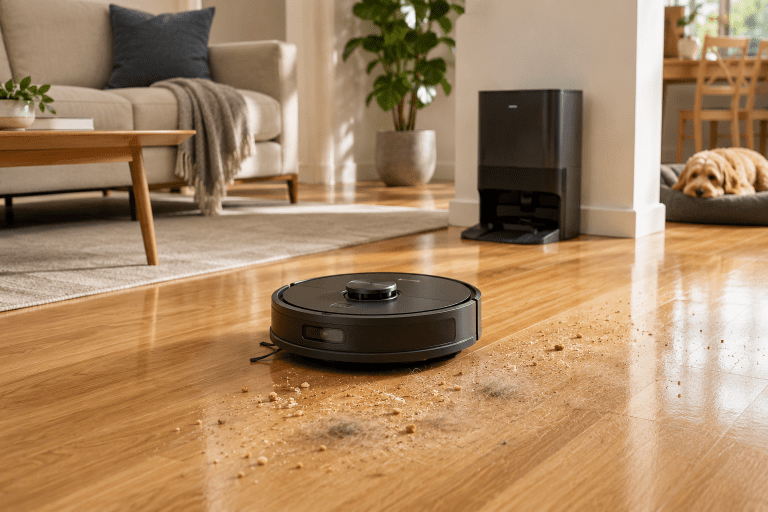
And then there’s the “right after a mess” problem. You spill rice. You drop a pile of potting soil. A robot vacuum is not the right tool for that job — you’ll need something with real suction and a human hand guiding it.
Which One Is Right for You?
Here’s a simple way to think about it:
If you want low-maintenance, day-to-day cleanliness and your hardwood floors are the main surface in your home — a robot vacuum is probably a smart addition. It won’t replace every cleaning session, but it’ll reduce how often you need one.
If you have significant carpet alongside your hardwood, pets with heavy shedding, or you just prefer a single, thorough clean on your own schedule — a traditional vacuum gives you more control and cleaning power.
A lot of households end up using both. The robot runs on weekdays; the traditional vacuum comes out on the weekend for a proper clean. It sounds like overkill until you try it, and then it just seems obvious.
The robot vacuum vs. traditional vacuum question doesn’t have a clean answer for hardwood floors — or anywhere else, really. They solve different problems. One maintains; one restores. One works while you sleep; one works when you tell it to.
Think about how often you actually vacuum right now, what your floors deal with on a daily basis, and how much you value your time versus your budget. Those three things will point you in the right direction faster than any spec sheet.
If you’re still on the fence, try borrowing a friend’s robot vacuum for a week. Most people have a pretty clear opinion after that.