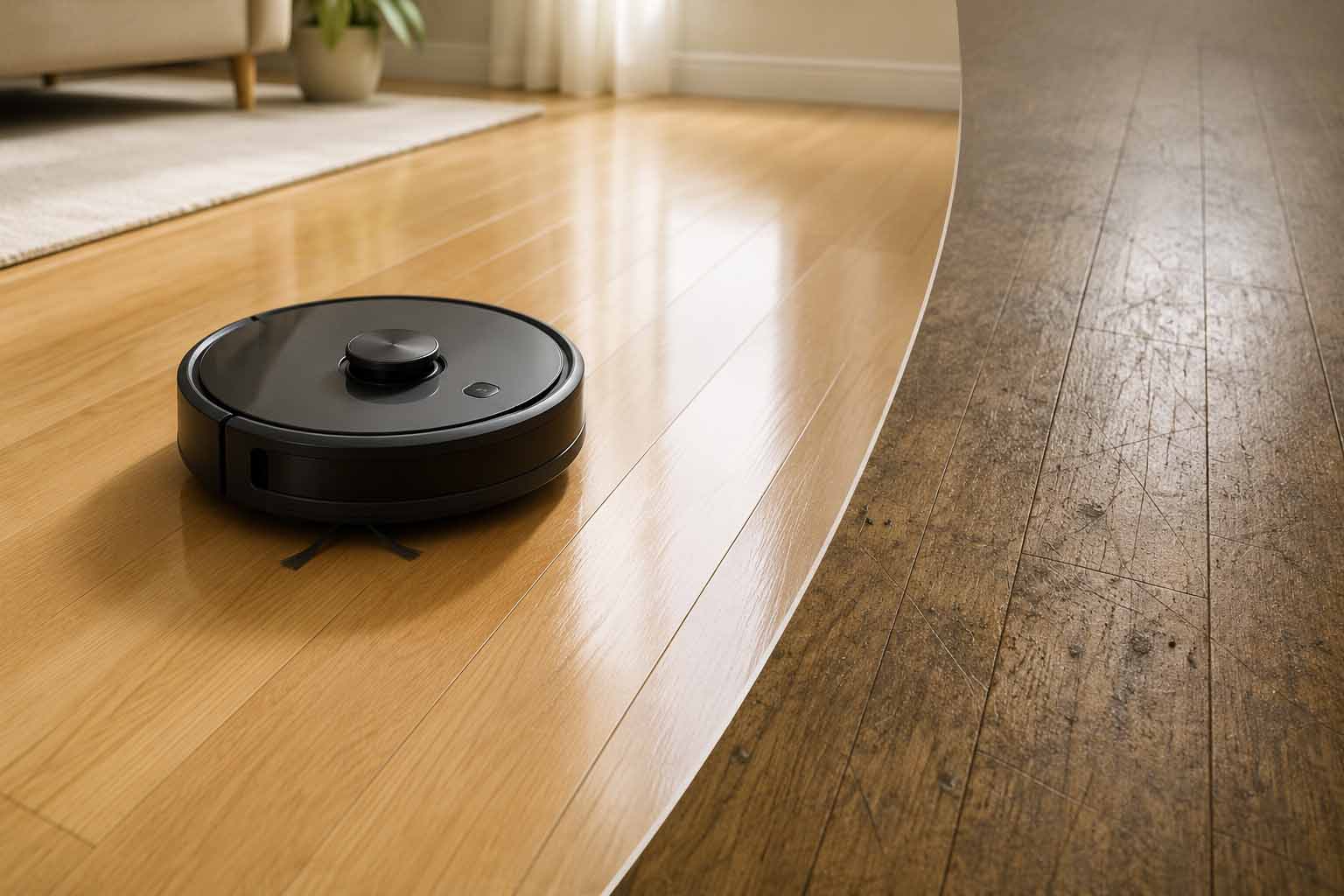
It sounds like something a robot vacuum manufacturer would say to sell more robots: run your machine daily and it will protect your floors. But strip away the marketing framing and there’s a genuinely interesting question underneath. Does vacuuming frequency actually affect how long floors last? And if so, does a robot vacuum running daily do more for floor longevity than a manual vacuum used once a week?
The honest answers are yes and yes — but the reasons are more specific than most people realise, and they differ meaningfully depending on your floor type. This guide covers the science of floor wear, what actually causes floors to deteriorate, and how consistent robot vacuuming fits into the equation.
How floors actually wear out
To understand whether regular vacuuming extends floor life, you first need to understand what causes floors to age in the first place. The answer is more interesting than it appears.
The grit problem: your floors are being sanded every day
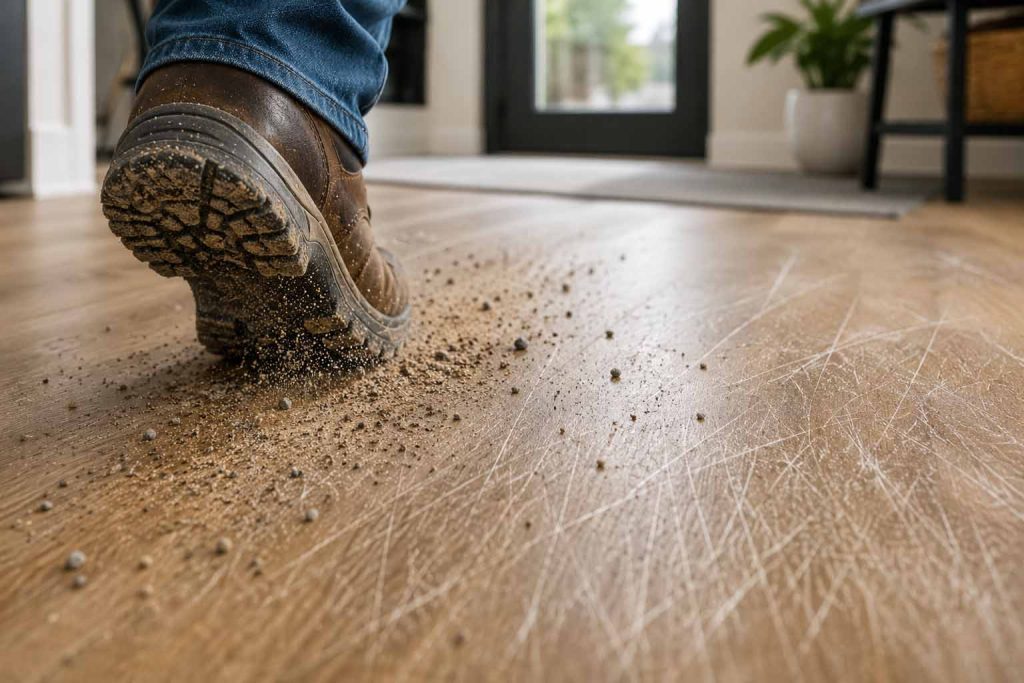
The primary mechanism of floor finish wear in homes — particularly on hardwood — is abrasion caused by fine grit, sand, and dirt particles being ground against the floor surface under the weight of foot traffic.
This isn’t a metaphor. Flooring professionals who sand and refinish hardwood floors use sandpaper grits ranging from 36 (very coarse) to 120 (fine). Fine dirt, sand, and grit tracked in from outdoors falls somewhere in the middle of that range. Every footstep on a floor that has accumulated grit applies the equivalent of light sandpaper pressure to the floor’s finish. Multiply that by the number of footsteps in a typical household day, and the finish wear adds up — continuously and invisibly until it becomes visible.
One flooring professional puts it plainly: if I come to your house in the winter, I’ll be bringing gritty particles in on my boots and I weigh more than the drum sander, so I’ll be literally sanding your floor with every step. You better have a substantial, well-adhered coat of finish.
The particles doing this damage are not large pieces of debris that you can see and avoid. They’re the fine, nearly invisible accumulation of outdoor grit, sand, and airborne particles that settles on floors continuously. You can’t see them, so you can’t step around them. The only way to manage them is to remove them before they build up to abrasive levels.
This is the core mechanism through which regular vacuuming extends floor life: it removes the abrasive material before it can accumulate to the level where it causes meaningful finish wear. Regular vacuuming will help extend the lifespan of floors, preventing damage and scratches caused by consistently walking over dusty, particle-laden surfaces.
Finish wear and the refinishing timeline
Hardwood floors have a layer of protective finish — typically polyurethane — applied over the wood surface. It is the finish that gives the floor its sheen and, more importantly, protects the wood beneath from moisture, staining and physical damage. When the finish wears off in high traffic areas, the bare wood beneath is exposed.
Properly maintained solid hardwood flooring will last 75 to 100 years or more. This longevity depends on the wood remaining protected by its finish, which can be renewed through refinishing. Solid hardwood can be refinished four to seven times across its lifespan — each refinishing removes a thin layer of wood along with the old finish, and a new finish coat is applied.
Here’s where vacuuming frequency enters directly: every time the finish is scratched by grit, the finish layer becomes thinner. A thinner finish layer provides less protection. A compromised finish layer requires recoating or refinishing sooner. And each refinishing removes more material from the wood, reducing how many refinishings remain in the floor’s lifetime.
Maintaining a consistent floor-cleaning routine that removes grit before it can abrade the finish delays the need for refinishing, extends the intervals between recoats, and ultimately means the floor retains more of its original wood depth across its service life. It is perhaps the single most important factor within your control when considering how to extend the lifespan of your hardwood flooring.
What the research and industry experts say
Flooring professionals, floor finish manufacturers, and home care experts consistently reach the same conclusion: frequent, gentle floor cleaning is the most impactful maintenance behaviour for floor longevity.
Sweeping or vacuuming hardwood floors at least twice a week is recommended to prevent dirt and debris from scratching the surface. For high-traffic homes with pets or children, daily cleaning is better still.
The recommendation for recoating hardwood floor finish — applying a fresh protective layer without full sanding — is every three to five years under typical conditions. In homes where grit accumulation is managed well through frequent cleaning, this interval can be extended. In homes where grit is allowed to accumulate between infrequent cleanings, finish wear accelerates and the recoat interval shortens accordingly.
The economic implication is significant. A professional recoat costs several hundred dollars for a typical room. A full refinish costs considerably more. Extending those intervals by even a few years through consistent daily cleaning represents real financial value — far exceeding the cost of running a robot vacuum.
How robot vacuuming specifically changes the equation
The argument for robot vacuuming as a floor-life extender rests on a specific advantage over manual vacuuming: frequency without friction.
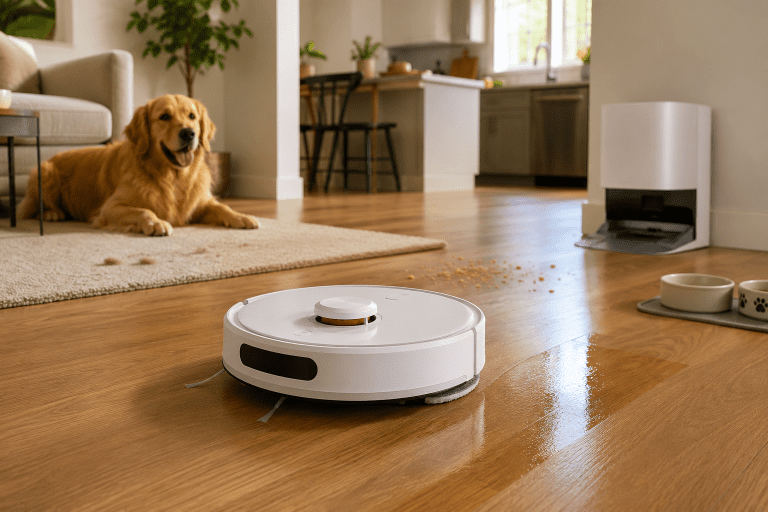
Most households that vacuum manually do so once a week at best, and often less frequently when life is busy. This means grit and fine particles are allowed to accumulate on the floor surface for days at a time, during which normal foot traffic is constantly grinding them against the finish.
A robot vacuum running daily changes this completely. Instead of a grit accumulation that builds across five to seven days before being addressed, daily runs mean accumulation is interrupted every 24 hours. The floor surface stays at near-zero grit load essentially continuously rather than cycling between clean and significantly loaded.
The practical effect: the total amount of abrasive contact between floor finish and grit particles over the course of a month is dramatically lower in a daily-cleaned home than in a weekly-cleaned home. The finish lasts longer between recoats. The floor looks better day to day. The risk of visible scratching from grit accumulation is substantially reduced.
This is not a marginal difference. If a floor finish is worn by abrasive contact, and that contact is proportional to how much grit is on the floor at any given time, then a floor cleaned daily experiences roughly one-seventh the peak grit load of a floor cleaned weekly. That’s a significant factor over years of accumulated wear.
Floor by floor: how vacuuming frequency affects different surfaces
Hardwood floors
Hardwood is both the most rewarding floor type to maintain and the most sensitive to the consequences of not maintaining it. The finish protection over real wood is doing real work — without it, the wood itself is exposed to moisture, staining, and mechanical damage.
Daily robot vacuuming on hardwood removes the grit before it can reach abrasive levels, preserves the finish layer, and reduces how often the floor needs recoating or refinishing. Given that solid hardwood can last 75 to 100 years or more with proper care — a claim that few other flooring materials can match — the investment in protection pays dividends across decades.
There is one important nuance for hardwood specifically: the robot vacuum must be well-maintained. A robot with dirty wheels, wrapped brushroll axles, or debris trapped in its undercarriage can itself become an abrasive element on the floor surface. A clean, well-maintained robot protecting a hardwood floor from grit accumulation is beneficial. A poorly maintained robot adding debris to the floor contact is counterproductive. Weekly wheel and brushroll checks are the maintenance complement to daily runs.
Luxury vinyl plank (LVP) and laminate
LVP and laminate floors have a wear layer — a transparent protective surface over the decorative layer beneath. This wear layer is the primary determinant of how long the floor looks good and performs properly. Once the wear layer is significantly abraded, the floor’s appearance and water resistance both degrade, and unlike hardwood, LVP and laminate cannot be refinished to restore them.
Premium LVP with a 22-mil or thicker wear layer can run 20 to 30 years under normal conditions. Budget LVP with thinner wear layers may fail inside 10 years. The factor that most determines which end of that range a floor reaches is how well the wear layer is preserved — and the primary threat to the wear layer is the same as with hardwood: grit abrasion from foot traffic.
Daily robot vacuuming on LVP and laminate removes the grit that would otherwise gradually abrade the wear layer, directly extending how long the floor retains its appearance and functional protection. For these floor types, which cannot be refinished and must eventually be replaced entirely, floor life extension through cleaning frequency is particularly valuable.
Tile and grout
Tile itself — ceramic, porcelain, or stone — is extremely hard and essentially immune to abrasion from household grit. Well-installed tile can last 50 years or more and the tile surface itself is rarely the limiting factor in tile floor lifespan.
The limiting factor is grout. Grout is porous and relatively soft compared to tile. Fine grit that accumulates in grout lines creates abrasion that gradually degrades the grout surface, opens microscopic gaps in the grout texture, and allows moisture and staining agents to penetrate. Over time, this leads to crumbling, cracking, or deeply stained grout that requires grinding out and replacing — a labour-intensive and costly process.
Daily robot vacuuming on tile removes the grit from grout lines before foot traffic can work it into the grout surface. This is a meaningful contribution to grout longevity, even though the tile itself needs no such protection.
Carpet
Carpet wears differently from hard floors. The fibres themselves are the protective and aesthetic surface, and they are damaged by a combination of compaction (fibres being pressed flat from weight and traffic) and abrasion from grit embedded in the pile.
The abrasion mechanism is the same as with hard floors — grit particles embedded in carpet fibres create abrasive contact with the fibres under foot traffic, cutting and weakening individual fibres over time. This is why high-traffic carpet areas show wear patterns: the fibres in those areas have experienced more abrasive contact and are more damaged.
Carpet has the shortest lifespan of common flooring materials, typically 5 to 15 years depending on fibre quality, pile density, and traffic load. Regular vacuuming — described in carpet care guidance as the most important maintenance action — removes embedded grit before it can damage fibres, and professional hot-water extraction every 12 to 18 months can push any carpet closer to the top of its lifespan range.
A robot vacuum running daily on carpet removes surface debris and light embedded grit continuously. It does not replace deep cleaning — a powerful upright vacuum used weekly and professional cleaning periodically remain necessary for carpet maintenance. But daily robot vacuuming significantly reduces the rate at which grit embeds deeply into carpet fibres, slowing the wear curve and extending the period before replacement becomes necessary.
The maintenance stack: what robot vacuuming does and doesn’t replace
It’s a good idea to be accurate about what daily robot vacuuming contributes to the longevity of the floor and what other maintenance steps are still needed.
What robot vacuuming handles:
- Daily removal of surface debris, grit, and fine particles from hard floors
- Prevention of grit accumulation that causes finish abrasion on hardwood and wear layer abrasion on LVP
- Continuous maintenance that keeps floor surfaces at consistently low particle loads
- Light debris removal from carpet pile
What it doesn’t replace:
For hardwood, periodic recoating of the finish every three to five years remains necessary regardless of how well floors are maintained between coats. Daily vacuuming extends the interval between recoats but doesn’t eliminate the need for them. Full refinishing every ten to fifteen years (or as needed based on wear depth) is the other essential long-term maintenance action.
For carpet, weekly deep vacuuming with a more powerful machine extracts embedded dirt from deeper in the pile that a robot’s suction doesn’t fully reach. Professional hot-water extraction every twelve to eighteen months removes embedded residues that vacuuming can’t address.
For all floor types, immediate spot-treatment of spills prevents staining and moisture damage that regular vacuuming has no bearing on.
The honest picture: daily robot vacuuming handles the most frequent and in many ways most impactful maintenance need — keeping abrasive material off the floor surface continuously. It operates within a broader maintenance framework that also includes periodic deeper cleaning, professional treatment, and finish renewal. It’s the most important daily action, not the only action required.
The refinishing comparison: what daily cleaning is worth in real numbers
Here’s a way to make the economic value of daily vacuuming concrete.
A professional hardwood floor recoat (applying new finish without full sanding) for a 500-square-foot living room and hallway costs roughly $300 to $600 in most US markets in 2026. A full refinish (sanding and new finish) runs $800 to $2,000 for the same area.
If consistent daily grit removal extends the recoat interval from three years to five years, the saving over a twenty-year period is two additional recoats avoided — approximately $600 to $1,200 in saved maintenance costs over that period, plus the disruption of having the work done.
If daily cleaning means the floor retains sufficient thickness for one additional full refinishing across its lifetime — which is plausible given that each sanding removes approximately 0.8mm of wood and an avoided recoat means less surface degradation demanding early full refinishing — the value is the entire additional service life of the floor in years before replacement is required. For hardwood, that could be decades.
The robot vacuum doesn’t create this value by magic. It creates it through the consistent removal of the specific particles that are doing ongoing microscopic damage to the floor’s protective layers every day.
Practical guidance: how to use robot vacuuming for maximum floor protection
Run it daily. The floor-protection benefit of robot vacuuming comes from maintaining consistently low grit levels on the floor surface, not from occasional cleanup. Daily runs are what prevent accumulation from reaching abrasive levels. For the floor-longevity benefit specifically, daily is meaningfully better than every other day, and substantially better than weekly.
Keep the robot clean. As noted above, a robot vacuum with debris-trapped wheels or a dirty undercarriage can itself introduce abrasive contact. Weekly wheel checks and brushroll cleaning ensure the machine removing grit from your floor isn’t simultaneously introducing grit in its wake.
Time runs before foot traffic, not after. Running the robot overnight or early morning — before the household is active — means grit removed during the run is gone before foot traffic can grind it into the finish. Running the robot in the evening and then walking on the floor throughout the day processes the same grit twice.
Combine with periodic manual cleaning for carpet. For households with carpet, use the robot for daily maintenance and a more powerful upright vacuum for weekly deep cleaning. The robot handles surface accumulation; the upright addresses what settles deeper in the pile.
Maintain the broader maintenance schedule. For hardwood specifically, recoat the finish on schedule even in well-maintained homes. Daily robot vacuuming extends the interval; it doesn’t eliminate the maintenance requirement entirely. Inspecting the finish annually in high-traffic areas and recoating when wear becomes visible rather than waiting for a fixed calendar interval is the most efficient approach.
The bottom line
The answer to the title question is yes — regular robot vacuuming genuinely does extend the life of floors, and the mechanism is specific and well-established. Grit and fine particles act as low-grade sandpaper on floor finishes under foot traffic. Daily removal of these particles reduces abrasive wear on the finish, extends refinishing intervals, and preserves the protective layers that determine how long floors remain in good condition.
The plus side is that vacuuming regularly will help extend the lifespan of floors, preventing damage and scratches caused by consistently walking over dusty, particle-laden surfaces. The frequency advantage of a robot vacuum — daily runs without scheduling effort or time cost — is precisely what makes it more effective for floor protection than a manual vacuum used weekly.
Solid hardwood typically lasts 50 to 100-plus years with proper maintenance and can be sanded and refinished four to six times across its lifespan. Whether a specific floor reaches the top or bottom of that range depends primarily on how consistently it is protected from abrasive damage during its service life. Daily robot vacuuming is the most practical and impactful daily action available for that purpose.
For LVP, laminate, and carpet — floor types that cannot be refinished and must eventually be replaced entirely — the economic case for daily cleaning is even more direct: every year of additional useful life is a year of replacement cost deferred.
The robot vacuum earns its place in floor care not as a convenience feature but as a genuine maintenance tool with measurable long-term value.