The idea that a clean home requires significant time is one of the most persistent and most damaging myths in domesticity. It doesn’t. What it requires is the right system — one built around your actual life rather than an idealised version of it where you have two free hours every Saturday morning and the motivation to use them.
Most people who struggle to keep their home clean aren’t lazy or disorganised by nature. They’re busy — genuinely, legitimately busy — and they’re trying to apply a cleaning approach that was designed for a different era and a different pace of life. The once-a-week full clean simply doesn’t work when five days of living happens between attempts. By the time Saturday arrives, the gap between the home you have and the home you want is so large that cleaning feels like a project, not a habit.
There is a better approach. It’s built on three ideas: consistency beats intensity, prevention beats cleanup, and automation handles what you don’t have to. This guide lays it out practically, room by room and habit by habit, for people whose time is genuinely limited and whose standards still matter.
Why a clean home matters more than you might think

Before the practical section, it’s worth understanding what’s actually at stake — because this isn’t just about appearances.
A 2025 study in the Journal of Environmental Psychology found that people who considered their homes more cluttered had lower levels of wellbeing and life satisfaction, as well as higher levels of negative feelings. This is not a trivial finding. The environment you live in actively shapes how you feel inside it, and the effect is measurable.
According to research at Princeton University, we are distracted by physical clutter, which takes away our attention from the task at hand. If you’ve ever noticed that you feel vaguely stressed or distracted at home but can’t quite identify why, the state of the space is often part of the answer.
Clutter can trigger a stress response in the body — a study found that women who described their homes as “cluttered” had significantly higher levels of the stress hormone cortisol throughout the day.
The goal of a clean home isn’t perfection for its own sake. It’s a living environment where you can actually relax, think, and recover — which is what home is supposed to be for.
The mindset shift that changes everything
The biggest obstacle to a clean home for busy people isn’t time. It’s the all-or-nothing thinking that treats cleaning as a single large event rather than a continuous low-level background activity.
When cleaning is something you do, it requires motivation, a free block of time, and enough energy to sustain effort through a task you probably don’t enjoy. When cleaning is something that happens as part of how you live, it requires none of those things. You wipe the stove because you’re already standing there. You put things away because that’s where they go. You reset the kitchen before bed because the alternative — starting every morning in yesterday’s chaos — is worse.
Learning how to keep a house clean when busy isn’t about finding more free time. It’s about building better systems. Systems are what allow consistent results without consistent motivation.
The practical version of this mindset: stop thinking about cleaning as a weekend task and start thinking about it as a series of 30-second to 5-minute micro-habits embedded in things you already do. Cooking, eating, showering, leaving the house, coming home — each of these is a natural trigger point for a maintenance habit that costs almost no time and collectively produces a home that stays clean.
The foundation: fewer things, less cleaning
No amount of efficiency compensates for owning more than your home can hold. Clutter is the primary reason homes become difficult to clean — not because cleaning is hard, but because you have to move things out of the way before you can clean anything, and putting them back means making decisions about where they belong.
Before building any cleaning system, spend time reducing the total volume of possessions to a level your home can accommodate without surfaces becoming default storage. This is a one-time investment that pays ongoing dividends in reduced cleaning time.
The practical test for any object: does it have a home — a specific place where it lives when it’s not being used? If not, it either needs a designated home or it doesn’t belong in the space. Objects without a home always end up on the nearest flat surface, which is where cleaning difficulty begins.
Key areas to address:
Kitchen countertops. The single biggest driver of kitchen cleaning difficulty is too many items living on the counter. Every item on a counter is something that has to be moved before the counter can be wiped. The ideal kitchen counter has as few permanent residents as possible — just the things you use daily. Everything else belongs in a cabinet.
Entryway surfaces. Bags, keys, mail, shoes, and coats all arrive at the entry point of your home and, without a designated system, spread from there. A dedicated hook for bags and coats, a tray for keys and small items, and an immediate decision on incoming mail (deal with it, file it, or bin it — never put it down indefinitely) contain the problem at the source.
Bedroom surfaces. Nightstands and dressers accumulate items because they’re the last surface people interact with before bed and the first surface in the morning. A strict rule — nothing lives on the nightstand but what you actually need there — makes the bedroom consistently easier to maintain.
The nightly reset: 10 minutes that do most of the work
If there is a single habit that makes the largest difference to how a home feels day to day, it is a brief nightly reset before bed.
A light daily touch saves hours later. Think of it like brushing your teeth — small daily action prevents bigger problems. Many people skip daily cleaning, then spend entire Saturdays trying to catch up. This creates a cycle of stress and frustration. Daily resets break this cycle and keep weekends free.
The nightly reset takes 10 to 15 minutes and covers the following:
Kitchen: Dishes washed or loaded into the dishwasher and run. Counters wiped. Stove surface wiped if used. Sink rinsed. This takes 5 to 7 minutes and means you wake up to a clean kitchen — one of the most psychologically powerful contributions to how the morning feels.
Living areas: Cushions straightened, throws folded, any glasses or plates returned to the kitchen, remote controls back to their spot, small items returned to wherever they belong. This takes 2 to 3 minutes in a home that isn’t heavily cluttered.
General surfaces: Any items that drifted from their home during the day returned to the right place. Bags hung up. Shoes in their spot. Mail dealt with.
Floor clear: A quick visual check that floor space is clear — this matters specifically for homes with a robot vacuum running overnight or early morning. Clear floors mean the robot cleans the floor, not a navigation obstacle course.
That’s it. 10 to 15 minutes, every night, before bed. The result: you never wake up to a home that feels like it’s already behind. The maintenance required to keep surfaces clean is trivially small when you’re starting from a clean baseline. The effort required to restore a home to a clean baseline after several days of accumulation is not trivially small.
Automate what you don’t have to do yourself
The most underused lever for busy homeowners is automation — specifically, identifying the cleaning tasks that a machine can handle so you don’t have to.
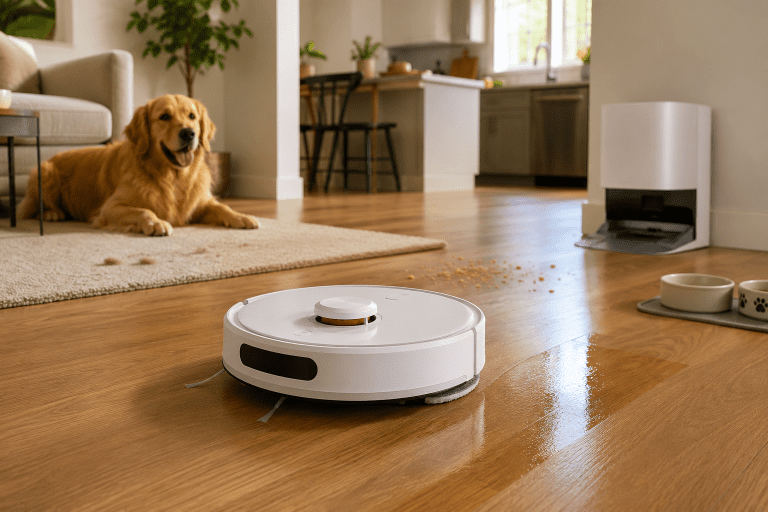
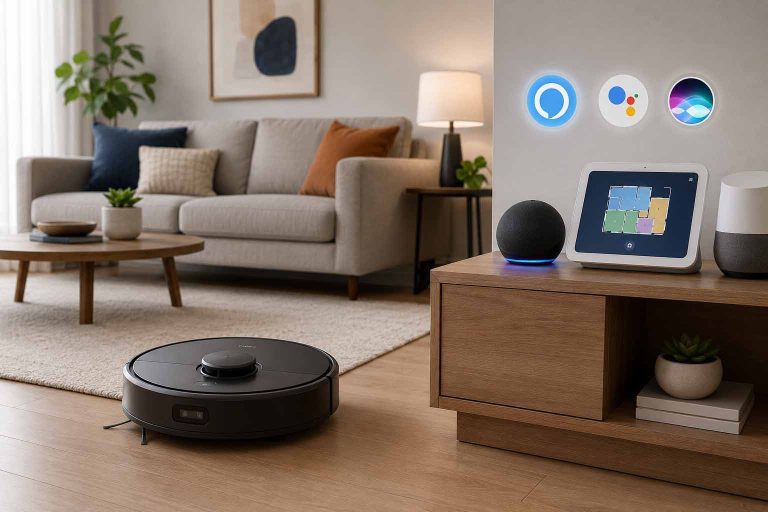
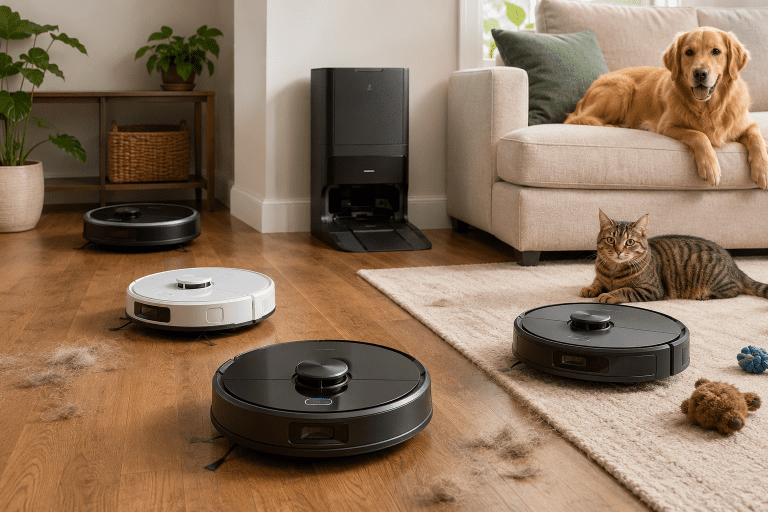
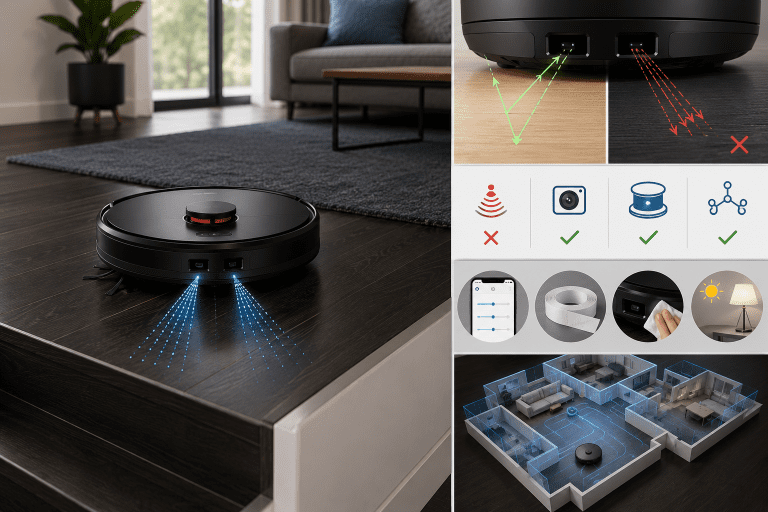
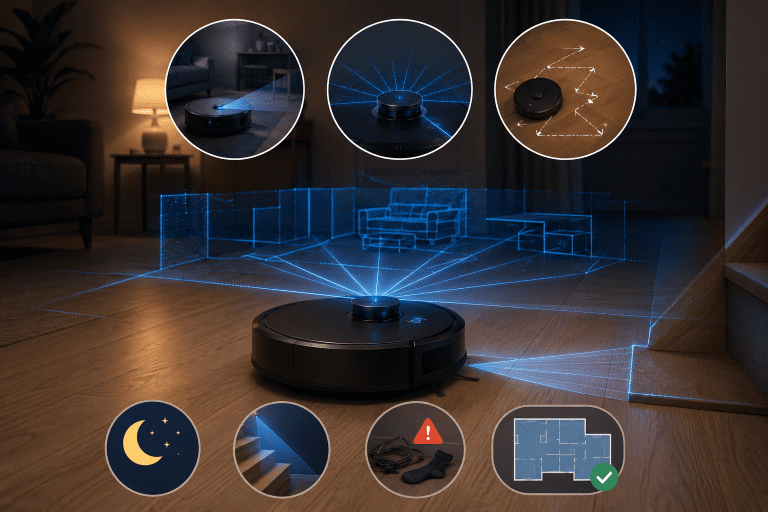
Floor cleaning is the obvious candidate. Floors are the highest-frequency cleaning need in most homes — pet hair, dust, crumbs, and tracked-in debris accumulate daily on every hard surface and carpet. A robot vacuum scheduled to run daily while you’re at work or asleep handles this entirely. Using a robot vacuum to automate daily cleaning makes your deeper cleans easier and faster too.
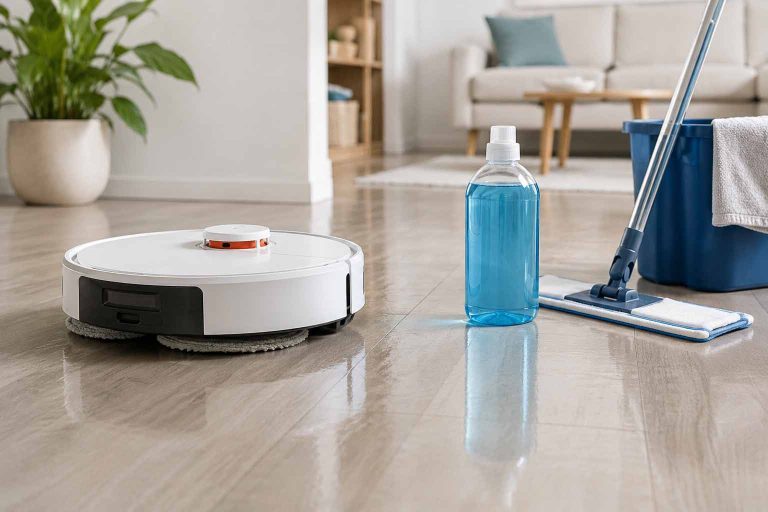
For homes with hard floors, a robot vacuum and mop combo running daily means mopping is also largely automated. The floors that would have required 30 minutes of weekly manual vacuuming and mopping happen automatically, every day, without your involvement.
The dishwasher is another automation that’s underused. Running the dishwasher every night regardless of whether it’s full eliminates the accumulation of dirty dishes that makes kitchen cleanup feel like a larger task than it is. The 60-second habit of starting the dishwasher before bed and emptying it in the morning means the kitchen is functionally always available for the next meal without dishes being an obstacle.
Laundry scheduling. The reason laundry becomes overwhelming is the same reason cleaning becomes overwhelming: infrequency. One load per day or every two days is a 10-minute habit. Letting laundry accumulate until it requires a full-day catch-up session makes it feel like a burden. Scheduled small loads, run and folded the same day, keep laundry from becoming a project.
The 20/80 principle: clean what creates 80% of the visible result
Here’s a game-changer: 20% of your cleaning tasks create 80% of the visible results.
When time is limited, identifying and prioritising that 20% means your home consistently looks and feels clean even when you haven’t done everything. The high-impact tasks in most homes are:
Kitchen counters and sink. A clean kitchen counter and an empty, rinsed sink make the entire kitchen feel clean, even if the inside of the microwave hasn’t been touched in a week. These are the two highest-visibility surfaces in the home’s highest-use room.
Bathroom sink and mirror. A clean basin and a streak-free mirror create the impression of a clean bathroom more powerfully than any other combination. A 2-minute wipe of these two surfaces every day or two maintains the bathroom’s appearance between deeper cleans.
Floors in entry and main living areas. First-impression spaces — the entryway, the living room — set the overall perception of cleanliness for your home. Consistently clean floors in these areas, which a robot vacuum handles automatically, carry disproportionate weight in how the whole home feels.
Made bed. A made bed makes a bedroom look organised regardless of what’s happening elsewhere in the room. It takes 90 seconds and has outsized impact on how the space feels when you walk in.
Focus your limited time on these highest-return areas before anything else, and accept that the inside of rarely-opened cabinets and the top of the refrigerator can wait for a periodic deep clean.
Room-by-room: the minimum effective dose
Kitchen
The kitchen rewards consistency more than any other room because it’s used multiple times daily and deteriorates quickly without maintenance.
Daily (5 minutes): Wipe counters after cooking. Rinse and load dishes immediately rather than letting them sit. Wipe the stove top after use — this 30-second habit prevents the baked-on grease buildup that requires 20 minutes to remove. Run the dishwasher every night.
Weekly (10 minutes): Wipe down cabinet fronts, particularly around handles where oils accumulate. Clean the microwave interior — a bowl of water with lemon slices microwaved for 3 minutes loosens everything for an easy wipe. Empty and wipe the inside of the refrigerator’s main shelf.
Monthly (15 minutes): Wipe the tops of cabinets, clean the range hood filter, and check for expired items in the pantry and refrigerator.
Bathrooms
Daily (2 minutes): Give the toilet bowl a quick swish with the toilet brush before it needs scrubbing. Wipe the basin and tap with a cloth that lives next to the sink for this purpose. Squeegee the shower after the last shower of the day — this 30-second habit prevents soap scum from setting.
Weekly (10 minutes): Full toilet clean including exterior and base. Wipe the mirror. Wipe all surfaces including the back of the toilet and the area around the base. Replace towels.
Monthly (15 minutes): Deep clean grout, wipe down tiles, clean the shower curtain or screen, and clean the exhaust fan cover.
Bedrooms
Daily (2 minutes): Make the bed. Return any items to where they belong. A made bed and clear surfaces are the entire daily requirement.
Weekly (10 minutes): Change bed sheets, which takes less time than most people expect when done consistently rather than put off indefinitely. Dust surfaces — nightstands, dresser tops, window sills. The robot vacuum handles the floor automatically.
Monthly (20 minutes): Vacuum mattress, rotate if needed, dust ceiling fan and light fixtures, wipe skirting boards, declutter any items that have drifted in.
Living areas
Daily (3 minutes): The nightly reset covers living areas almost entirely — cushions, throws, items returned to their places, glasses to the kitchen.
Weekly (10 minutes): Dust surfaces and electronics with a microfibre cloth. Wipe remote controls with a disinfectant wipe. The robot vacuum handles floors.
Monthly (15 minutes): Vacuum sofa cushions and under cushions. Wipe skirting boards. Clean windows.
Cleaning supplies: simplify to accelerate
A cluttered cleaning supply situation slows you down in two ways: you have to find the right product for each task, and having too many options introduces decision friction that makes starting harder.
The minimum effective cleaning kit for most homes:
All-purpose spray for kitchen and bathroom surfaces — one product, most surfaces.
Microfibre cloths for dusting and wiping — washable, effective dry or damp, replace paper towels for most tasks.
Toilet bowl cleaner for the one surface an all-purpose spray doesn’t cover well.
Glass cleaner for mirrors and windows.
Floor cleaner compatible with your robot mop system, if applicable.
That’s five products. Everything else — the specialised marble cleaner, the wood polish, the upholstery spray — is useful periodically for specific tasks but doesn’t belong in your daily or weekly routine.
Store cleaning supplies in each room where they’re used rather than in a central cupboard. Having the bathroom spray already under the bathroom sink means you can wipe the basin in 30 seconds without retrieving anything. Friction reduction — making the right action easier to do than not to do — is the mechanism behind most successful habits.
Handling the inevitable backlog
Even with a good system, life intervenes. A week of travel, illness, an unusually demanding work period — the home falls behind, and you come back to more disorder than the nightly reset can handle in one evening.
The approach that works: triage, don’t attempt a full restore in one session.
Identify the three areas of highest visibility and highest daily impact — almost always the kitchen, the bathroom, and the main floor space. Bring those back to baseline first. Once those are done, the home is liveable again, and you can address remaining areas in normal-maintenance-sized increments over the following days rather than burning an entire evening or weekend in one exhausting session.
The secret weapon for busy homeowners is short, focused cleaning sessions. Not hour-long deep cleans. Set a timer for 15 minutes. Focus only on high-impact zones. When the timer goes off, you stop. This approach prevents burnout and makes cleaning feel less intimidating.
The weekly schedule that actually works
Rather than a rigid room-by-room schedule that falls apart the moment one day doesn’t cooperate, a priority-based approach is more resilient.
Every day: Nightly kitchen reset (10 min). Bed made (2 min). Robot vacuum running automated.
Three times a week: Bathroom sink and mirror wipe (2 min). Quick surface check in living areas (2 min).
Once a week: Change bed sheets (10 min). Full bathroom clean (10 min). Dust living areas and bedroom surfaces (10 min). Weekly laundry session.
Once a month: Deep clean kitchen appliances (30 min). Bedroom full reset including mattress vacuum (20 min). Living room sofa vacuum and under-furniture clean (20 min).
Twice a year: Full top-to-bottom deep clean of each room, including the areas that never get touched in weekly maintenance — ceiling fans, top of cabinets, inside oven, behind appliances.
Total weekly active time: approximately 45 to 60 minutes, distributed across the week in small sessions rather than concentrated into a single cleaning day.
What to let go of
A realistic approach to keeping a clean home when time is limited requires accepting that some things don’t need doing as often as the idealistic version of a clean home suggests.
Inside cabinets and drawers can be cleaned quarterly rather than weekly. The backs of shelves can be dusted twice a year. The inside of the oven only needs attention every few months with regular surface wipe-downs. Ceiling fans need cleaning every month or two, not every week.
The goal is a home that consistently feels clean and comfortable to live in — not a home that would pass a professional cleaning inspection at any random moment. Knowing where the high-return tasks are and doing those consistently produces the former without requiring the time and effort that would be needed for the latter.
The bottom line
Keeping a clean home when you have limited time is entirely achievable — but it requires a different approach than the one most people were taught. Weekly marathon cleaning sessions are inefficient and unsustainable. Small daily habits, strategic automation, and ruthless prioritisation of the highest-impact tasks produce consistently better results with consistently less effort.
You don’t need to deep clean every week if you build a few simple habits: put things away, not down. Less clutter forms when items go back where they belong after use.
Start with the nightly reset. Add the robot vacuum. Build the bathroom 2-minute habit. These three changes alone will produce a home that feels meaningfully different within a week — not because you’ve cleaned more, but because you’ve cleaned smarter.