You set your robot vacuum to run at 2 a.m. while you sleep. Smart move — no noise, no interruptions. But then you wonder: can it actually see where it’s going? Does it just bump around blindly in the dark, or is it quietly doing a solid job?
The short answer is: it depends on the model. Some robot vacuums handle darkness just fine. Others struggle more than you’d expect. This article breaks down how robot vacuums navigate, which technologies work without light, and what you should know before scheduling that midnight cleaning session.
How Robot Vacuums Navigate (And Why Light Matters for Some)
Not all robot vacuums use the same navigation system. This is the core reason why some work great in the dark and others don’t.
Camera-based navigation is where lighting becomes a real issue. These robots use onboard cameras to map your home visually, essentially building a picture of your rooms the same way a security camera would. If there’s no light, the camera can’t capture usable images. Brands like Roomba (specifically the j-series) and some Ecovacs models use camera-based systems. In low or zero light, their mapping accuracy drops noticeably.
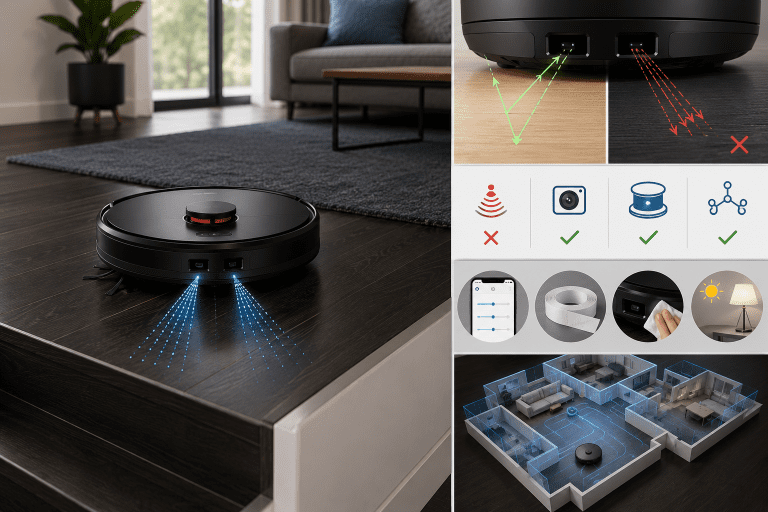
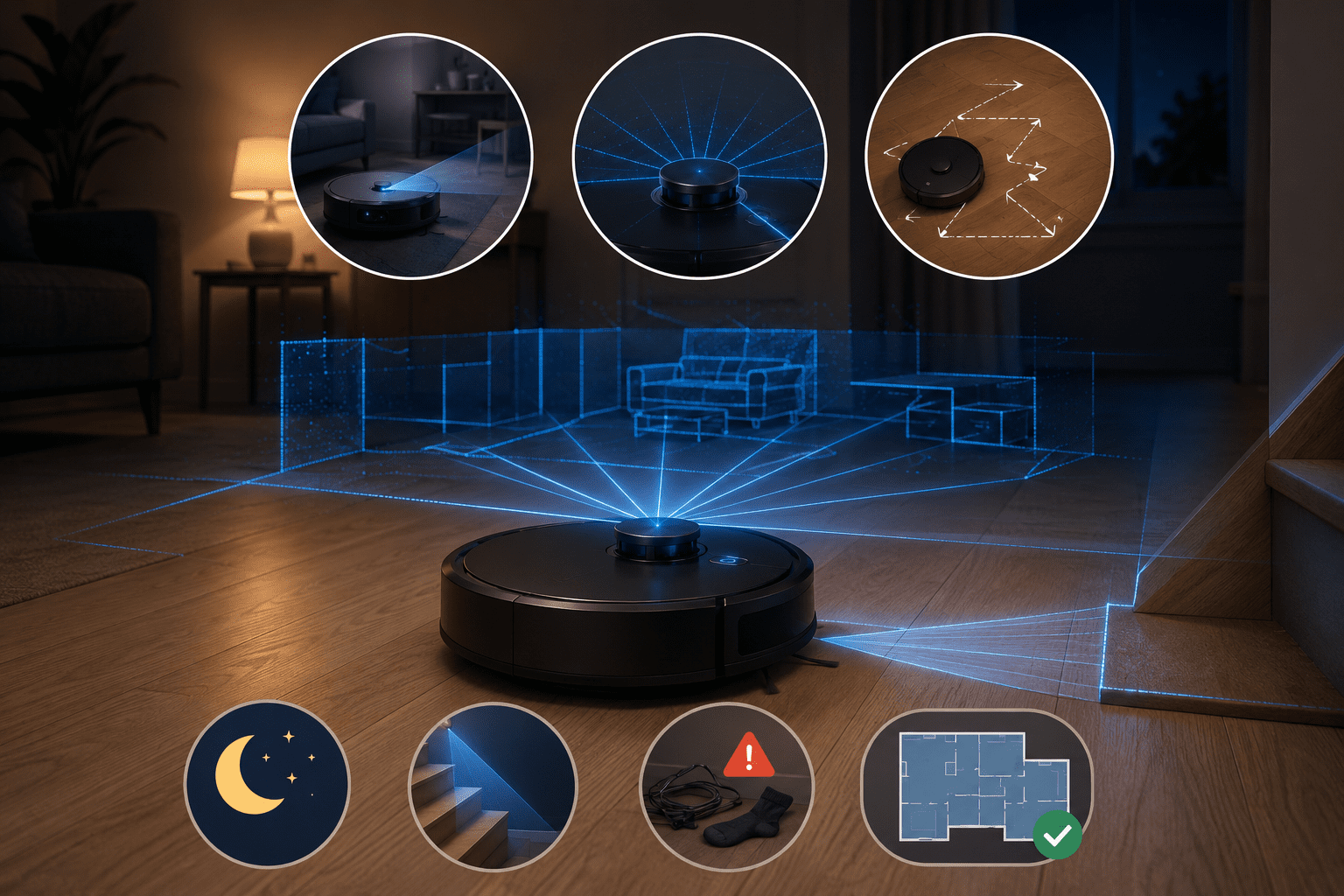
LiDAR-based navigation is a different story. LiDAR (Light Detection and Ranging) fires laser pulses to measure distances and map the room. It doesn’t need ambient light at all — it generates its own reference points. Most mid-to-high-end models from Roborock, Dreame, and Narwal use LiDAR, and these work perfectly in complete darkness.
Gyroscope and bump-sensor navigation (found in budget models) also doesn’t rely on light. These robots use a mix of wheel odometry, cliff sensors, and physical bumping to figure out where they are. Not the smartest approach, but light isn’t a factor.
Which Navigation Technologies Work in the Dark?
Here’s a quick comparison to make this concrete:
| Navigation Type | Works in the Dark? | Examples |
|---|---|---|
| LiDAR | Yes, fully | Roborock S8, Dreame L20 Ultra |
| Gyroscope/bump sensors | Yes | Eufy 11S, basic iRobot models |
| Camera-based (optical) | Partially or poorly | Roomba j7+, some Ecovacs |
| SLAM with camera | Depends on lighting | Varies by model |
If dark-hour cleaning is a priority for you, LiDAR is the safest bet. It’s not even close.
What About Cliff Sensors and Obstacle Detection at Night?
Even if the main navigation system handles darkness well, there’s another concern: obstacle avoidance. Most robot vacuums use infrared sensors for cliff detection, and infrared works independently of visible light. So your robot won’t fall down the stairs at 3 a.m. That part is generally fine across brands.
Obstacle avoidance is trickier. Robots with camera-based object recognition (to avoid cables, socks, pet waste) rely on visible light for that feature specifically. The Roomba j7+ is a good example. Its camera-based PrecisionVision obstacle avoidance is essentially useless in the dark. The robot will still clean, but it may run over things it would normally dodge during the day.
LiDAR robots don’t use cameras for obstacle detection in the same way, so they’re more consistent regardless of lighting.
Does Darkness Affect Cleaning Performance?
Navigation aside, the actual vacuuming part — suction, brush roll, dirt pickup — has nothing to do with light. Whether it’s noon or midnight, the motor works the same. Darkness won’t affect how well the robot picks up pet hair or dust from your floors.
What can change is the path efficiency. A camera-based robot that can’t map well in the dark may clean in a less organized pattern, miss some spots, or take longer to finish. A LiDAR robot will follow the same systematic path it would during the day.
So if you have a higher-end LiDAR robot, you genuinely won’t notice a difference between a daytime and nighttime run. The map it built during a previous session is already stored, and it uses that alongside live laser scanning to navigate.
Practical Tips for Running Your Robot Vacuum at Night
If you want to make the most of overnight or dark-hour runs, a few things help:
Leave a small nightlight on if your robot uses cameras. Even a dim glow can improve camera-based navigation enough to matter. It sounds silly, but users on forums like Reddit’s r/roomba consistently report better map accuracy with minimal ambient light.
Clear the floor before bed. Obstacle avoidance is weaker in the dark for camera-based models, so picking up cables, kids’ toys, or anything else the robot might snag reduces the risk of a tangled mess by morning.
Run it on a saved map. Most modern robots save a map of your home after the first few mapping runs. When they navigate from a saved map rather than mapping fresh each time, they rely less on real-time camera input and more on the stored layout. This helps camera-based models significantly.
Check your robot’s specs. Check to see if your specific model is LiDAR or camera based navigation. Manufacturers don’t always make this obvious in marketing materials, but a quick search of the model name plus “navigation type” usually gives you a clear answer.
So, Should You Run Your Robot Vacuum at Night?
For most people with a modern robot vacuum, yes, nighttime cleaning works well. If you have a LiDAR-based model, there’s no meaningful drawback. Run it whenever you want.
If you have a camera-based model like the Roomba j-series, it can still clean at night, but expect slightly less consistent results compared to a well-lit room. It won’t be a disaster, but it won’t be the robot’s best work either.
The practical reality is that millions of people schedule their robot vacuums to run at night, and most of them are happy with the outcome. The technology has come a long way. Just know your specific robot’s strengths, give it a reasonably clear floor, and let it do its thing while you sleep.
Bottom line: LiDAR robots work flawlessly in the dark. Camera-based robots work, but with some caveats. Budget bump-and-go models don’t care about light either. Check your model’s navigation type, and you’ll know exactly what to expect.