How Self-Emptying Robot Vacuums Work (And Why They’re a Game Changer)
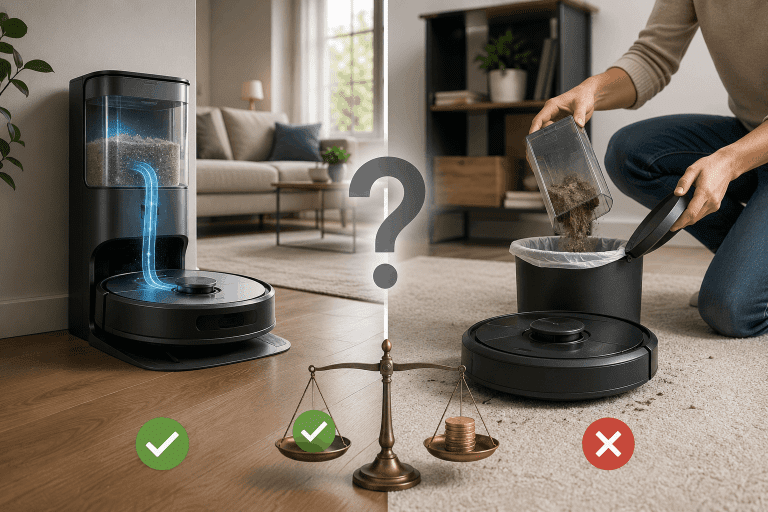
If you’ve ever owned a regular robot vacuum, you know the drill. It zips around doing its thing, and then a day or two later you have to crouch down, pop open a tiny dustbin, and try not to sneeze while emptying it into a trash bag. Not exactly the hands-free dream the commercials promised.
Self-emptying robot vacuums fix that problem. They’re designed to handle the whole cycle on their own — vacuuming your floors and then depositing the collected dirt into a larger base station, so you barely have to think about it. This article breaks down how the technology actually works, what you should know before buying one, and whether the extra cost is worth it.
The Basic Setup: Robot + Base Station
A self-emptying robot vacuum is really two devices working together.
The robot itself works like any other robot vacuum — it navigates your home using sensors or cameras, picks up dust and debris with a combination of brushes and suction, and stores everything in a small onboard dustbin. That part hasn’t changed much.
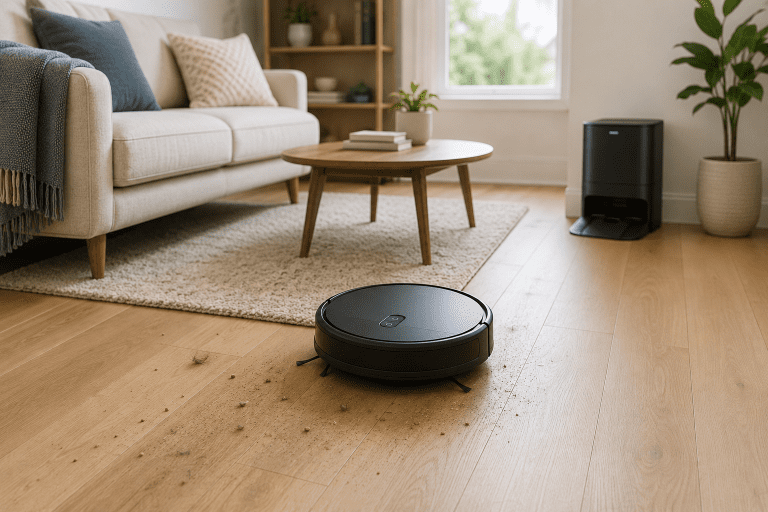
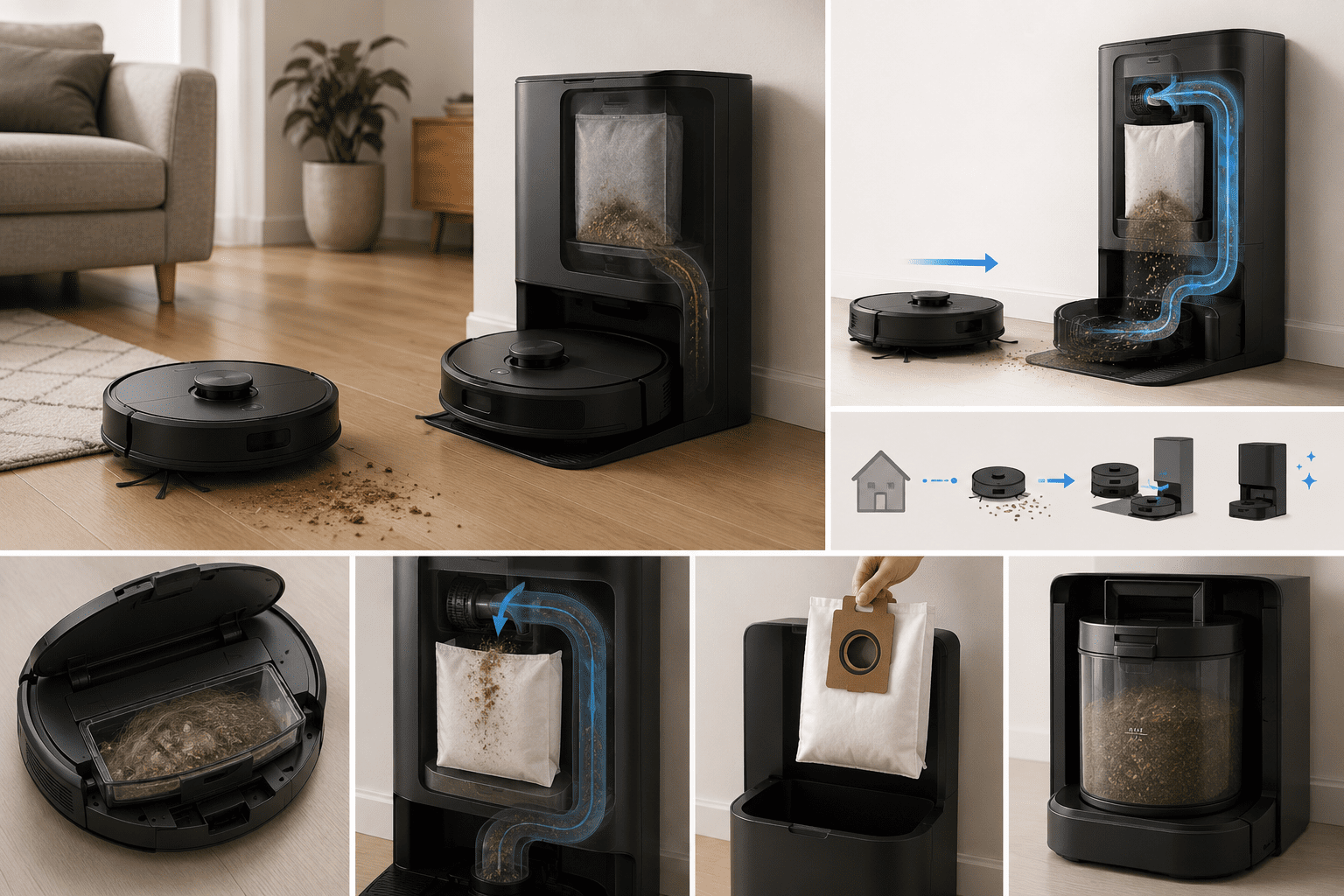
What’s different is the docking station. Instead of just being a charging pad, the base station doubles as a collection bin. It’s noticeably larger than a standard dock, usually about the size of a small humidifier or desktop speaker. Inside, there’s a sealed bag or a bagless container that holds significantly more dirt than the robot can carry on its own.
When the robot finishes a cleaning cycle (or when its dustbin gets full), it drives back to the dock. The base station then uses a powerful suction motor to pull all the debris out of the robot’s dustbin and into the larger container. The whole process takes about 10 to 20 seconds, and then the robot is ready to go again with an empty bin.
The Auto-Empty Mechanism: What’s Happening Inside
The suction generated by the base station is usually much stronger than what the robot produces during cleaning. Some models generate enough airflow to fully clear fine dust particles, not just the larger debris. This is important, because fine dust is what tends to accumulate and cause allergen issues.
There are two main container styles you’ll find:
Bagged systems use disposable bags inside the base station, similar to a traditional vacuum. These bags are designed to seal when you remove them, which helps reduce dust exposure during disposal. Most bags last anywhere from 30 to 60 days depending on how often the robot runs and how much it picks up.
Bagless systems use a sealed container that you empty manually. You still have to deal with the dust yourself, but there’s no ongoing cost for replacement bags. Some people prefer this for sustainability reasons, though the cleanup is less tidy.
How the Robot Knows When to Empty Itself
Most self-emptying robot vacuums are programmed to return to the dock after every cleaning session by default. But there’s more going on depending on the model.
Higher-end robots monitor their dustbin fill level using sensors. When the bin reaches a certain capacity mid-clean, the robot will pause, return to the base station to empty out, and then head back to where it left off to continue cleaning. This is especially useful in larger homes or if you have pets that shed heavily.
Some models also let you set a schedule through an app. You can tell the robot to empty after every run, every other run, or at specific times. For homes with allergy sufferers, more frequent emptying is generally the better approach.
Comparing Self-Emptying Models: Key Differences to Know
Not all self-emptying robot vacuums are built the same. Here’s a quick comparison of what varies across price ranges:
| Feature | Budget Models | Mid-Range | Premium Models |
|---|---|---|---|
| Auto-empty base included | Sometimes add-on | Usually included | Included |
| Base station capacity | 30–45 days | 45–60 days | 60+ days |
| Dustbin sensor | No | Sometimes | Yes |
| Mapping/navigation | Basic | Room mapping | Multi-floor mapping |
| Mop + vacuum combo | Rare | Available | Common |
| App control | Basic | Full-featured | Full-featured + AI |
Premium models like the Roborock S8 Pro Ultra or the iRobot Roomba Combo j9+ go a step further — some can also refill their own water tanks for mopping and even clean their own mop pads. It sounds almost excessive until you realize you’ve gone three weeks without touching your floors at all.
Is a Self-Emptying Robot Vacuum Worth It?
That depends on your situation, honestly.
If you have a smaller apartment, vacuum regularly, and don’t mind handling a small dustbin every couple of days, a standard robot vacuum will do the job without the extra cost. Self-emptying bases typically add $100 to $300 to the price, and the replacement bags are an ongoing expense on top of that.
But for larger homes, households with pets, or anyone who just wants to completely forget about daily cleaning tasks, the upgrade makes real sense. The convenience factor is hard to overstate. You set it up once, maybe replace a bag once a month, and your floors stay clean without much thought.
There are a few things worth keeping in mind before you buy:
- Noise: The base station suction is loud, usually around 70–75 decibels. It only lasts for about 15 seconds, but it can be startling if the robot docks while you’re nearby.
- Size: The base station takes up more counter or floor space than a regular dock.
- Bag costs: If you go with a bagged system, factor in roughly $15–$30 per year for replacement bags.
Putting It All Together
Self-emptying robot vacuums work by pairing a standard robotic cleaner with a powered docking station that extracts and stores debris automatically. The robot cleans your floors, drives home, and a strong suction motor handles the rest. Depending on the model, you might only need to empty the base station every 30 to 60 days.
The technology has matured a lot over the past few years. What used to be a niche premium feature is now available at a range of price points, and the reliability has improved considerably.
If you’re tired of constantly maintaining your robot vacuum or you want a cleaning setup that genuinely runs itself, a self-emptying model is probably the most practical upgrade you can make to your home routine. Start by deciding whether you want a bagged or bagless base, check that the docking station fits your space, and go from there.